
Trust economics: Why security is the new loyalty program


Executive Summary
- Customers extend real trust when they share personal data, but that trust is fragile — a single security misstep can undo it on the spot.
- As secure, low-friction payment experiences - like tokenization and biometrics - become the norm, they're shifting from a backend safeguard into a visible part of the customer experience, and a reason customers choose to return.
Retailers have spent decades investing in loyalty programs designed to give customers a reason to come back. Points. Discounts. Personalized offers. Member-only perks.
But none of them matter if customers don’t trust the transaction itself.
As commerce becomes more digital, connected, and personalized, consumers are paying closer attention to how brands protect their payment credentials and personal information. That makes security more than a backend requirement. It is increasingly part of the customer experience, and part of the value exchange between retailers and their customers.
The data supports that connection. According to the Thales Digital Trust Index 2025, 64% of respondents said that their confidence in a brand would significantly increase if they adopted emerging or advanced technologies that improve security and data protection.
For retailers, that changes the economics of trust. Security isn’t simply about preventing fraud or meeting compliance requirements. Done well, it can give customers greater confidence to transact, return, and build a lasting relationship with a brand.
Loyalty programs reward customers for coming back. Trust gives them a reason to.
Customers value protection
Rewards can encourage another purchase. They can’t compensate for a customer losing confidence in how a brand handles their data.
PwC's 2025 Customer Experience Survey found that 53% of consumers believe sharing personal information with brands can be worthwhile. But that willingness comes with a clear expectation: 93% say a brand will lose their trust if it mishandles that data.
The implication is clear: consumers may be willing to share their data, but that trust comes with high expectations for how businesses protect it.
Consumers are already extending significant trust to the businesses they choose. McKinsey found that 70% express at least a moderate degree of confidence that the companies they buy from are protecting their data. The opportunity for retailers is to reinforce that confidence at every interaction, particularly at the point where some of their most sensitive information changes hands: payment.
Security is becoming part of the expected experience
Secure transactions are increasingly becoming the standard rather than a differentiator. For instance, Visa reported a 44% increase in tokenized transactions in 2024, which the company says contributed to a 30% reduction in fraud.
As these technologies become more widespread, consumer expectations rise with them. Shoppers may not always see the security working behind a transaction, but they notice when something goes wrong. One report found that 75% of consumers would consider severing ties with a brand following a cybersecurity incident.
The opportunity, however, isn’t simply to add more security. It’s to make security part of a trusted, low-friction experience.
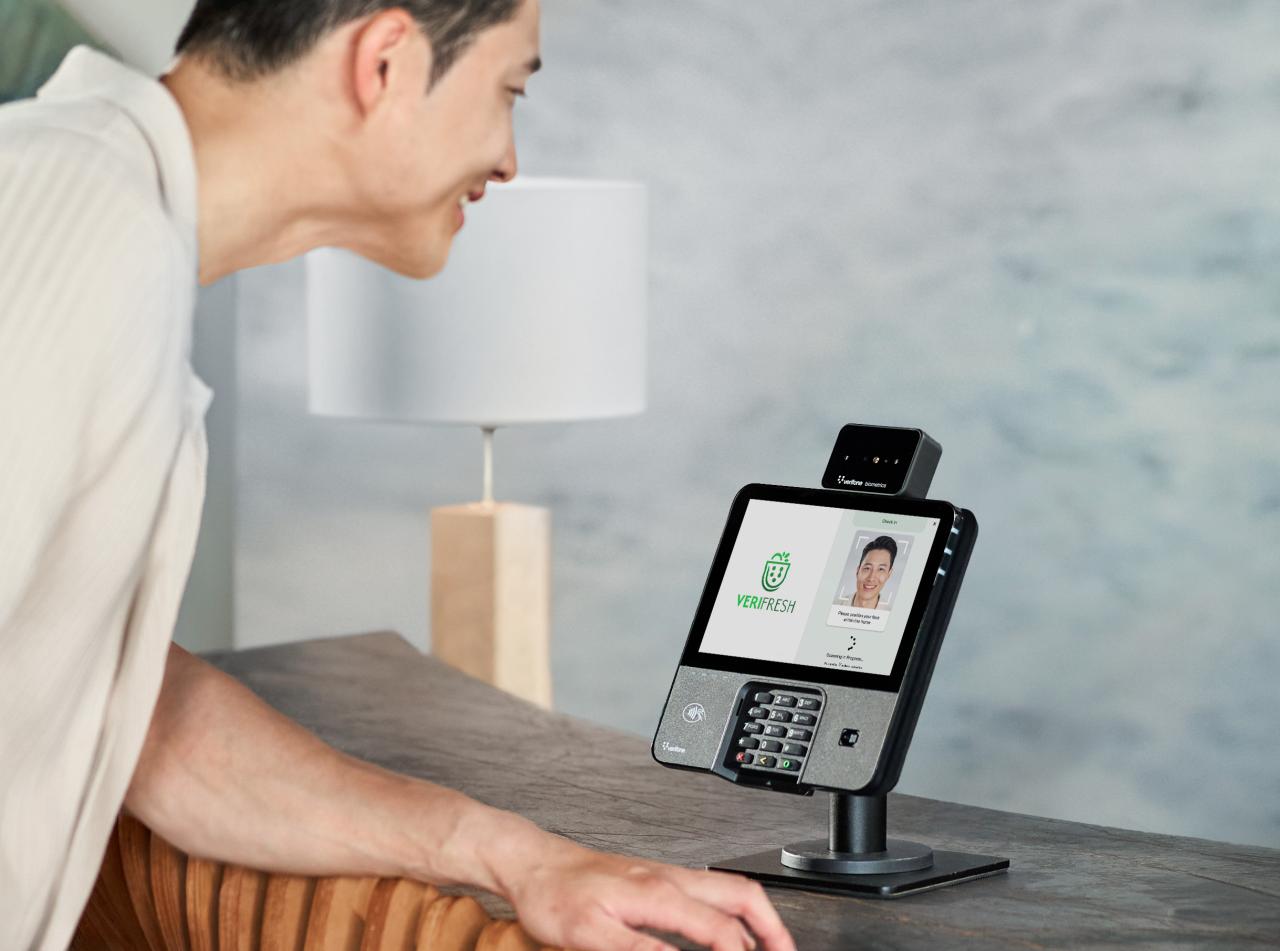
Biometrics are one example. In the Thales Digital Trust Index 2025, 64% of respondents said their trust in a brand would increase if it used biometric authentication like fingerprint or facial recognition. When implemented with appropriate privacy, consent, and data protection controls, biometrics can add another layer of identity verification while making authentication faster and more intuitive.
And adoption is expected to grow. Juniper Research forecasts 46 billion biometric-enabled transactions globally by 2028.
For retailers, the direction is clear: customers increasingly expect security and convenience to work together.
Building trust at two levels
Security technology alone doesn’t create trust. Customers also need confidence in how a brand handles their information and, in the experience, they’ll have each time they transact.
In Cisco's 2025 Data Privacy Benchmark Study, 79% of respondents cited enhanced loyalty and trust among customers as a key benefit of data privacy investments.
For retailers, that trust is built at two interconnected levels: trust in the transaction and trust in the relationship.
Trust in the transaction: Security and consistency
Every transaction is a moment when customers place their trust in a retailer. They expect their payment information to be protected, but they also expect that protection to come without making the experience harder.
Security provides the foundation. Technologies such as tokenization can reduce the exposure of sensitive payment credentials by replacing card data with substitute values that have limited usefulness if compromised. Other authentication technologies can add layers of protection without necessarily adding friction to the customer experience.
For consumers, much of that protection should happen in the background. They tap, authenticate, and continue on their way.
But trust also depends on consistency. Shoppers may move between a retailer’s physical store, website, and mobile app without thinking of them as separate experiences. They expect the same confidence in how they transact across each one.
Familiar authentication experiences, payment choices, and checkout flows can help create that continuity. Bringing capabilities consumers already use in digital commerce, such as biometric authentication, into physical stores can also make new experiences feel more intuitive.
When those experiences break down, trust can erode quickly. A clunky checkout, an unavailable payment method, or visibly outdated technology can introduce a question no retailer wants a customer asking at checkout, "Is this safe?"
Trust in the relationship: Transparency and control
Protecting the transaction is only part of the equation. Customers also need confidence in what happens to their information before and after they pay.
That starts with transparency.
Personalization depends on an exchange of value. Customers share information with businesses and expect those businesses to use it responsibly. Clear privacy policies and straightforward explanations of what data is collected, why it’s collected, and how it’s used can make that exchange more transparent.
Privacy regulations such as the GDPR and CCPA have also established clearer requirements around consumer data and privacy rights. For retailers, transparency isn’t simply a compliance exercise. Helping customers understand what they’re agreeing to — and what happens to their information — can give them greater confidence in the relationship.
Transparency becomes more meaningful when it’s paired with control.
Giving customers meaningful choices over how their information is collected and used, including consent and opt-out options, helps put that transparency into practice. According to Thales, 53% of consumers expect the right to data erasure while 52% expect informed consent.
Together, transparency and control help establish a clearer value exchange: customers understand what they’re sharing, why they’re sharing it, and what choices they have.
When both sides of trust work together — a secure, consistent transaction and a transparent relationship that gives customers control — trust becomes part of the experience itself. And that gives customers another reason to return.
Trust as a business differentiator and growth engine
Traditional loyalty programs still have an important role to play. But points, discounts, and perks work best when they’ve built on something more fundamental; confidence in the brand itself.
That’s what makes trust economically valuable.
A secure transaction can reduce risk. A consistent experience can reduce uncertainty. Transparency can give customers greater confidence in sharing information. And control can reinforce that the relationship is happening on their terms.
Individually, those moments may seem small. Over time, they build on one another, strengthening the confidence that keeps customers coming back.
For retailers, that means payment security shouldn’t be viewed solely through the lens of fraud prevention or compliance. It’s also part of the customer experience and an opportunity to protect the relationships retailers have worked hard to build.
Turn trust into a growth advantage
Loyalty isn’t built in a single transaction. Neither is trust.
Every secure payment, familiar checkout, transparent data interaction, and moment of customer control gives customers another reason to transact with confidence.
Loyalty programs reward customers for coming back. Trust helps earn the next transaction.
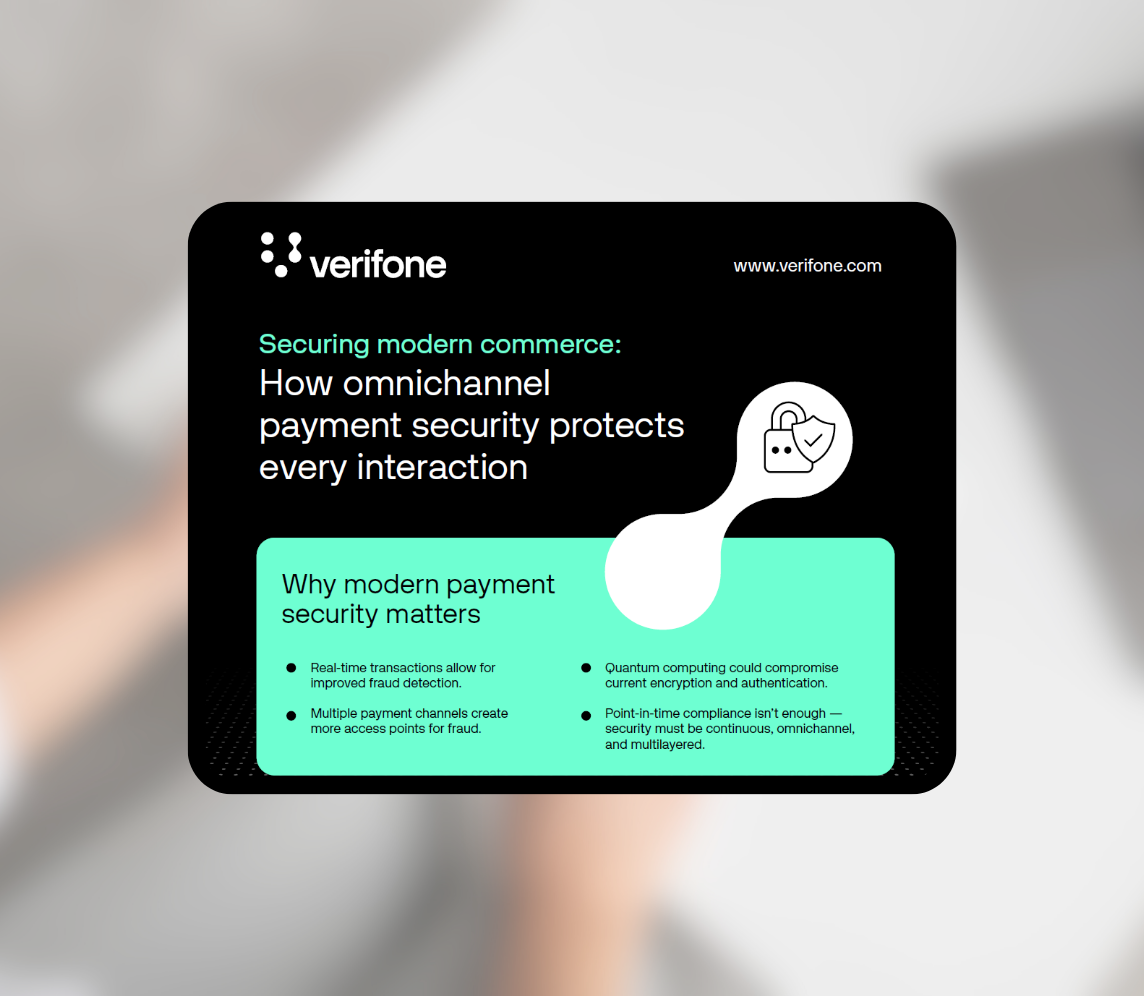
INFOGRAPHIC
See how retailers can protect payment data across channels while keeping commerce moving. Explore our infographic, Securing Modern Commerce: Omnichannel Payment Security.
About Verifone