
SoftPOS at scale: Why purpose-built hardware matters

Executive Summary
- SoftPOS makes mobile payment acceptance easy to start, but scaling introduces new hardware and operational demands.
- Purpose-built SoftPOS devices can deliver more consistent performance, longer battery life, and simpler fleet management.
- Victa SoftPOS Mobile is designed from the ground up for SoftPOS workflows, giving organizations the consistency and durability that general-purpose devices can't.
SoftPOS is changing where payments happen
At first glance, SoftPOS seems simple. Download an app. Install it on a commercial Android or iOS device. Start accepting contactless payments.
That promise is real. But it is also incomplete.
As commerce shifts beyond the traditional checkout counter, payments now happen on the floor, at the table, curbside, and in the field. This shift has created demand for flexible, mobile payment experiences — and SoftPOS has stepped in to meet it.
To get started, many businesses turn to commercial off-the-shelf devices. It is easy to see why. These devices are widely available, familiar to users, and relatively inexpensive. For early pilots or limited deployments, they often perform well enough to validate the concept.
The challenge begins when organizations scale beyond a pilot
What works across a handful of devices often behaves differently across hundreds or thousands. The transition from pilot to production introduces a layer of complexity that is not obvious at the outset. Performance becomes less predictable. Operations become harder to manage. What once felt straightforward starts to feel fragmented.
Why the hardware becomes the bottleneck
This is where many organizations make a critical mistake. When friction appears at scale, the instinct is to blame the software. More often, the underlying problem is usually the hardware.
The gaps tend to show up in very practical, very visible ways. Tap interactions fail or take longer than expected, slowing transactions and creating friction at checkout. Devices struggle to last a full shift, forcing interruptions that disrupt operations. Everyday workflows require multiple devices because scanning or printing is not integrated. Managing a fleet of mixed hardware quickly becomes a burden rather than an advantage.
None of these issues are rooted in SoftPOS as a concept. They stem from the fact that consumer-grade devices were never designed for payment environments.
The difference comes down to design priorities. General-purpose devices are built for versatility. Payment environments demand consistency, speed, and durability under continuous use. When those expectations collide, inconsistencies surface. NFC performance can vary significantly, leading to unreliable tap experiences.Battery life becomes a limiting factor during long shifts. Differences in operating systems and update cycles create gaps in security and device management. Over time, these small inconsistencies compound into meaningful operational challenges.
The result is a mismatch between what the business needs and what the hardware can deliver. That’s why the real decision isn’t simply whether to adopt SoftPOS — it’s how to support it at scale.
Purpose-built SoftPOS hardware changes the equation
Purpose-built SoftPOS hardware changes the equation by aligning the device with the realities of payment acceptance. Instead of adapting a general-purpose tool, businesses use technology designed specifically for payment workflows. The difference shows up in faster, more consistent tap interactions, devices that last through full shifts, and integrated capabilities that streamline everyday tasks. It also shows up behind the scenes, where standardized platforms make fleet management more predictable and reduce operational overhead.
What begins as a cost or convenience decision often becomes a question of total cost of ownership. Off-the-shelf devices may accelerate deployment, but hidden costs emerge as estates grow — slower transactions, higher support volumes, increased replacement rates, and the complexity of managing inconsistent hardware.
SoftPOS follows a familiar pattern in technology adoption. Easy to start. Harder to scale.
The organizations that succeed recognize this early and design for scale from the beginning. They look beyond the application and consider the full experience, including the hardware that sits at the center of every transaction.
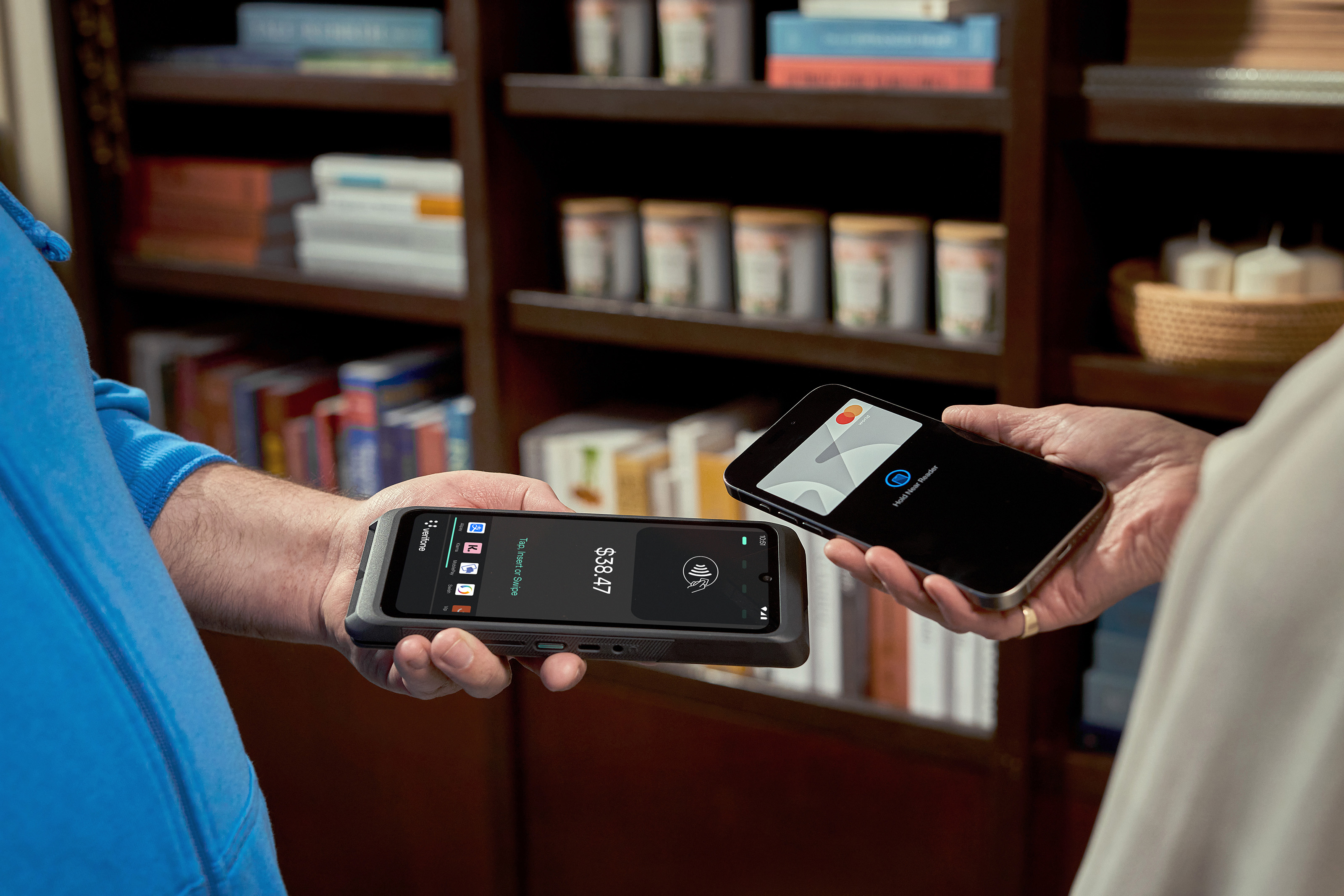
This is exactly the problem a new generation of purpose-built solutions is designed to solve. Victa SoftPOS Mobile is built specifically for mobile and on-the-floor payment workflows, delivering the consistency, performance, and operational control that large-scale deployments require.
Paired with Verifone Tap, Verifone’s SoftPOS application, it brings purpose-built hardware and software together for a complete SoftPOS experience.
In SoftPOS, the device is not just where software runs. It defines the payment experience.
About Verifone